
Light Work, Baby
How Two Legal Ministries Bring Light to Places of Need

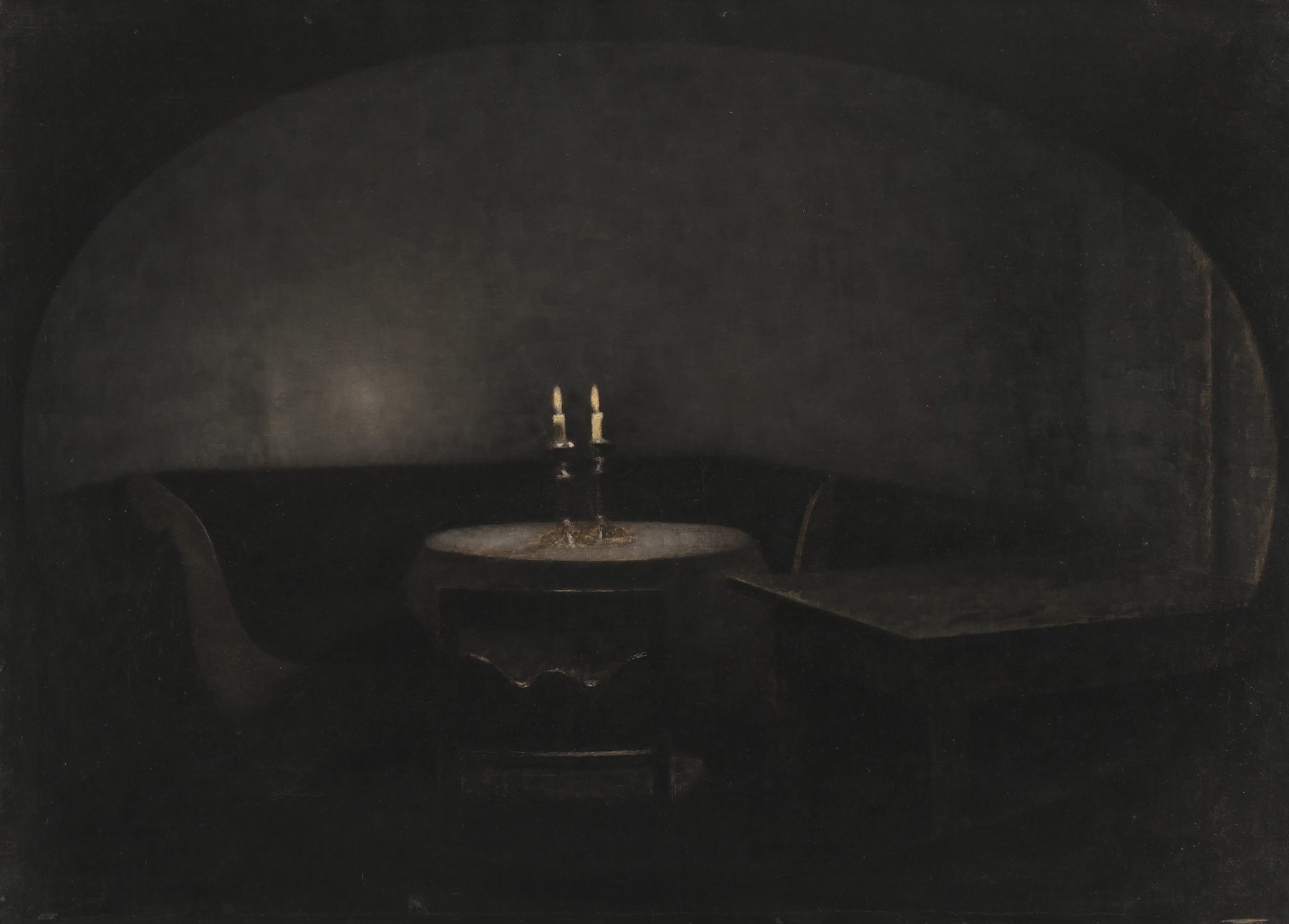
“All the colours of this most beautiful world grow pale once you extinguish its light, the firstborn of creation.” (Johann Georg Hamann)
Introduction
Many who visit the Book of Micah visit only the single chapter that speaks to the importance of acting justly, loving mercy, and walking humbly with God (Micah 6:8). But if one was to keep reading, they would come across a rather astounding reminder in Micah 7:8 regarding the importance of perseverance and respite in the comfort that God provides:
“Rejoice not over me, O my enemy;
when I fall, I shall rise;
when I sit in darkness,
the Lord will be a light to me.”
In this verse—and despite an ongoing pattern of disobedience and defeat for Israel—a promise is delivered rooted in hope that our God is a patient God, who takes seriously the process of repentance.
The process of repentance is not comfortable, and over time discomfort leads to the habits of neglect. We see this neglect throughout history when Christians perpetuate a public theology no better than what the wisdom of man can devise. It is here in Micah that we find the antidote for evil patterns when we hear the author telling his enemies not to rejoice (or laugh, viz., Lamentations 3:14) in Lady Zion’s falling,[1] for in that darkness she will wait in the comfort of God’s light. It is a plea in the context of confusion and despair, where trust in neighbor is low (Micah 7:5), the family structure is in disarray (Micah 7:6), and those who are “faithful have been swept from the land”—leaving only violence and conspiracy (Micah 7:2-3). And, yet, despite present circumstances, there is a hope of renewal and that in the application of faith and patience can the vindication of God be achieved (see Micah 7:9). As Leslie C. Allen writes, “the hearts of the community savor the prospect of light and liberation at God’s hand.”[2]
And so my point is this: in a culture like our own, where winning is preeminent, there is much to say about the posture of defeat as the vehicle for spiritual growth. With the process of repentance comes formative introspection. As the prophet understood, there is an appropriate place for lamentation in personal sin and the sin of former failures. Israel’s past, explains Allen, “has caught up with them: in a conscious attitude of solidarity with former generations they confess their national sin.”[3] But with judgment comes comfort, with repentance comes unburdening: the medicinal administration of relief after a state of assessment of one’s shortcomings and failures. Only through the vehicle of repentance can a Christian properly arrive at the confession of David: “The Lord is my light and my salvation; whom shall I fear?” (Psalm 27:1). Only then can the proper posture be restored in the ongoing work of Christian ministry. Only then can our own light work begin.
Before the Dawn
The juxtaposition of worldly darkness and the hope of God’s light speaks volumes to the presence of the Church in the world. Today, we are surrounded by signs of the Fall. From the rampant exploitation of the lust-to-power among public elites, to the billion-dollar industries that peddle in flesh and exploit the weaknesses of the human condition, to the parasitical meddling of surveillance capitalists who presume to speak of knowledge concerning the Antichrist, Americans are in constant struggle for signs of light amidst a river of darkness. In the words of T.S. Eliot, “I think we are in rats’ alley, where the dead men lost their bones.”
How then should Christians live?
The Church, in this moment, must remember the light of God in Micah 7 and return to be the light for others sitting in darkness in faithful obedience to the mandates of Matthew 5:14.
“You are the light of the world. A city set on a hill cannot be hidden.”
Our political action should be rooted in a theology of restoration, as illustrated by Charles Wesley when he wrote these words: “Long my imprisoned spirit lay fast bound in sin and nature’s night. Thine eye diffused a quickening ray, I woke, the dungeon flamed the light.”
That Light that lights up the hope of the prophet also serves to provide shelter to those in faithful obedience resting in its glow to serve as model for our own ascribed stewardship. It is a contagious glow for those who spend their mornings in its radiance, equipping the saints for the work ahead.
So, how then should Christians live? In the hope of failure and the ministry of quickening rays!
Light Work
The inevitable question might be then: What does this ministry look like in practice? And maybe more specifically, what does it look like in legal practice?
While examples abound, two projects have served as exemplars in legal ministry to show the contagion of “light” work in the midst of bad weather. Both works have embodied a beautiful and perhaps sobering and bleak personification of George Wesley’s words in the title of the LP from the band, Silver Mt. Zion: He Has Left Us Alone but Shafts of Light Sometimes Grace the Corner of Our Rooms. Both ministries seek to abide by the calling of faithful presence by fulfilling what Zachary Calo describes as “an embodied and enacted commitment to human flourishing.”[4] Both ministries embody a work of public forgiveness and service that shows the integrity of the law and the opportunity that good stewardship can achieve when power is used to advance the well-being of society.
A. Kushinda Court
Our first instance takes us to Dayton, Ohio, where under the auspices of the Montgomery County Common Pleas Court sits the Kushinda Court (“the Court”) under the vision and direction of the Honorable Gerald Parker. This court is part of the wider strategy to create specialized dockets that allow for a therapeutic approach to law. Alongside the Kushinda Court, there are also separate divisions that build on two treatment courts (i.e., men and women), a mental health court that address issues of severe mental illness, and veterans court that focuses on specialized needs of veterans.[5]
The name “kushinda” is taken from Swahili, signifying the idea of “conquering, defeating or overcoming.” Its mission is simple: “to facilitate effective, evidence-based treatment of 18–29-year-old Black male offenders from urban communities who have been placed on intensive community supervision.” It is, in the words of Quinn Howard of the Montgomery Country Office of Re-Entry, a “preventative or intervention court.” A system entirely counter to the culture of today that peddles in racialized grievances by asking not “what’s wrong with you,” but “what happened to you, and how can we help you deal with what got you to this point?” While asking the right questions is important, setting up systems for success is essential. To do this, the Court leans heavily into a “culturally proficient curriculum” that takes seriously the struggle many of these men faced in marginalized communities plagued with violence.[6] As Judge Parker explains, true justice restores and redeems: this program does just that by seeking to restore those who “people gave up on.”
Among its kind, it is the first specialized docket in the state of Ohio, based on the Habilitation Empowerment Accountability Therapy (HEAT) curriculum. Those admitted into the program on Intensive Supervision Probation (ISP) must complete the nine-month HEAT curriculum, perform their required hours of community service, commit no new criminal offenses, and abstain from any use of drugs and alcohol. But more importantly than the specific action items is the drive to change the mindset of those admitted into the program.[7] Not only by instilling better values and providing employment opportunities, but also by developing a better decision-making process when surrounded by negative influences and traumatic circumstances upon reentry.
Understanding the reasons why someone might struggle with the law is multifold, but Judge Parker does an excellent job explaining root causes. He explains that individuals end up in the justice system due to gun possession are often driven by an impulse for self-protection; that failure to comply with authorities often stems from a distrust of police rooted in a history of abuse; and that drug possession charges are often rooted in a simple lack of economic opportunities in underserved communities.[8] These are not excuses for unlawful or anti-social behavior, but instead important metrics that help answer that fundamental question of “what happened to you,” especially pertaining to the absence of what Terence Lester describes as healthy communities that provide support and guidance in order to break through the chains of injustice.[9] In short, Judge Parker embodies what Lester describes as those “nonjudgmental people . . . who look past the circumstances and see the potential—offering the support needed to keep pushing forward.”[10]
Of course, not everyone will successfully finish the program—some will have to serve time for violating their terms of probation. But the idea of providing alternatives towards rehabilitation and restoration is a quintessentially Christian value. And that is perhaps no surprise given Judge Parker’s own Christian faith.
B. TEU School of Law
My second exemplar of light work takes us to South Sudan, where a new Christian law school was launched hoping to provide the region an opportunity to develop attorneys capable of stabilizing a region struggling with poverty, corruption, and violence.[11] The Episcopal University (TEU) is a private, Christian university founded by the Episcopal Church of South Sudan. In 2023, TEU launched their school of law in Juba seeking to provide quality training for attorneys with an emphasis on ethics. It operates alongside the Bishop Gwynne School of Theology, offering opportunities for students to not only seek legal training, but also to grow in their understanding of vocation and Christian discipleship. As their website explains, South Sudan only has two other law schools and the need for well-educated attorneys is essential to strengthen their young nation.
To accomplish this goal, just any law school won’t do. A Christian law school is the ideal vehicle for training attorneys who understand leadership as servanthood. A testimony of a third-year law student captures this well, who says that legal education is not merely the memorization of texts and statutes, but goes to the heart of what Proverbs 31:8-9 admonishes all Christians to do: “Open your mouth for the mute, for the rights of all who are destitute. Open your mouth, judge righteously, defend the rights of the poor and needy.” In short, the legal career should be understood as linked to public service and not the exclusive domain of pursuing personal wealth.
Writing on religious freedom and natural law, Alex Deagon notes that “[d]iverse institutions provide a safe haven for diverse individuals with varying self-understandings and convictions, as opposed to policies which flatten or eliminate religious diversity.”[12] In a country like Sudan with a majority Muslim population, it is already difficult to be a Christian let alone a Christian attorney. With the development of TEU’s school of law and the South Sudanese newly acquired independent status, a new opportunity is born that helps provide a shard of light into the corners of African society not often seen or heard. The school not only helps advance the role of community as essential to our human nature, but also it provides a space for common action and intellectual curiosity often unseen when a society is surrounded by threats of violence. It is in the conversation between Christianity and law that deeper questions of common welfare find refuge and men can step into their respective vocations mindful of the uniqueness of the legal craft.
Writing in his Table Talks, eminent law and religion professor, John Witte, Jr., explains the role of attorneys in this field:
“We jurists are at once the masters and the servants of this cathedral of the law. Some of us build on the edifice, some of us tend its doors. Some of us are the Michelangelos who paint frescoes with fine-haired brushes, others of us are the widows who sweep the floors with crude straw brooms. But we all have a craft, we all have a calling, we all have a place for our tools and our talents in this cathedral of the law.”[13]
With the introduction of the new law school in South Sudan, every year new students will enter into this awesome labor of legal ministry and apply their talents in building up the cathedral for future generations to enjoy. They can play their role in helping advance the conversation between Christianity and law, combining their new skills with the Christian mandate to seek the welfare of their city (Jeremiah 29:7).
While the school’s future remains uncertain, it is in the construction of such projects that the people of South Sudan can serve as first light to the surrounding regions as evidence that peace and stability is possible.
Conclusion
The story of small lights making major impacts litters the history of the Church and remains among the most astounding moments of contemporary political theology. It is in those ordinary moments that we learn with Josef Pieper how to “perceive all that is unusual and exceptional.”[14] These moments bridge the modern witness to those of the early Church, when, e.g., Christians stayed behind to minister to the sick when others were fleeing the plague that hit the Roman Empire in the third century AD. Writing in his “festival letters,” Bishop Dionysius of Alexandria recounts the light work he saw and heard during that time:
“Most of our brethren showed love and loyalty in not sparing themselves while helping one another, tending to the sick with no thought of danger and gladly departing this life with them after becoming infected with their disease.”[15]
Today, the Christian ideal is not always accepted by the public, and in many instances the marrow of Christian ethics must be explained and defended as a standard inimical to the “natural” way of behaving. However, what the data suggests is quite encouraging when it comes to the confluence of law and religion. On one hand, the political climate has led to a resurgence of applications to law schools, creating a field increasingly fruitful for ministry that will require vigilance as to the intellectual complexities of the youth generation and the rising dynamics heralded by the introduction of AI into legal practice. On the other hand, according to the Pew Research Center, American’s views about religion in public life is shifting, with a sharp rise of U.S. adults (59%) seeing the increasing influence of religion as positive. This further corresponds with an increasing number of prospective law students prioritizing “helping others” and advocating for “social justice” over “financial security.”[16]
Combining these trends, it is likely that more Christians will pursue legal education in the coming years and then ideally become employed across a vast array of practice areas where they can engage in “light work” that serves the welfare of the city. With the introduction of AI into the legal profession, it is also likely that Christian attorneys will be well-suited for the shift into what Jordan Furlong calls “human attributes”—harnessing their capacity “to form trusted relationships, to offer legally-informed but personally-inflected counsel, judgment, and wisdom.” Whatever opportunities the next chapter in legal intelligence brings, the Church is well-suited to address this new “social question” with love and light, until Christ returns to bring us home and serve once more as the sole source of illumination (Revelation 22:5).
[1] See generally James D. Nogalski, The Book of Micah 221-22 (2024) (“in these verses, one woman speaks to another woman, and the first speaker should be understood as Lady Zion”).
[2] Leslie C. Allen, The Books of Joel, Obadiah, Jonah, and Micah 396 (1976).
[3] Id. at 395.
[4] Zachary R. Calo, Faithful Presence and Theological Jurisprudence: A Response to James Davison Hunter, 39 Pepp. L. Rev. 1083, 1087 (2013).
[5] Honorable Judge Parker, The New Kushinda Court Program of the Montgomery County Common Pleas Court, YouTube (May 1, 2023).
[6] The Honorable Gerald Parker, The Judge’s Desk: Kushinda Court, in Bar Briefs 20-21 (Sept/October 2023), https://issuu.com/daytonbarassociation/docs/sept_oct_23revissuu.
[7] Supra note 5.
[8] Id.
[9] Terence Lester, From Dropout to Doctorate: Breaking the Chains of Educational Injustice 54, 100 (2025). I say “healthy” to draw an important contrast with the unhealthy communities that lure young men into gang affiliation. See, e.g., id. at 73.
[10] Id. at 101. As Lester writes, a “more stable community of people is needed to stand in solidarity with those facing poverty to support them as they rise from the maze of injustice in their environment—and not just economically.” Id. at 109. For more, my interview with Terence Lester is available here.
[11] Episcopal University unveils new Vice Chancellor and inaugurates School of Law, Radio Tamazuj (Sept. 9, 2023), https://www.radiotamazuj.org/en/news/article/episcopal-university-unveils-new-vice-chancellor-and-inaugurates-school-of-law; see also A special evening with South Sudan’s TEU School of Law, https://luma.com/acls4southsudan (last visited Nov. 3, 2025) (covering a recent fundraising event led by the Australian Christian Legal Society).
[12] Alex Deagon, Christian Natural Law and Religious Freedom: A Foundation Based on Love, the True, and the Good 99 (2025).
[13] John Witte, Jr., Table Talks: Short Talks on the Weightier Matters of Law and Religion 27 (2023), https://www.johnwittejr.com/uploads/9/0/1/4/90145433/table_talk_-_open_access.pdf.
[14] Josef Pieper, Leisure: The Basis of Culture (Including The Philosophical Act) 113 (2009).
[15] Eusebeus, The Church History 240 (Paul L. Maier trans., 1999).
[16] “In comparing the top three selected motivation statements in 2023-24 to the top statements in 2024-25, it is clear that helping others and advocating for social justice remain the top motivations for test takers[.] In fact, the mention of helping others increased by about 20%, and advocating for social justice increased by more than 30%, between 2023-24 and 2024-25.” Alisha Kirchoff and Elizabeth Bodamer, LSAC’s Knowledge Report 2024-2025 Test Takes, LSAC 2 (2025), https://www.lsac.org/sites/default/files/research/2025-PLQ-Report.pdf.
A special thanks to Judge Parker and Stella Long for their feedback and resources.
Insightful. Your deep dive into finding light amidst darkness is truly profound, making me wonder how this principle manifests as universal psychological resilience, an internal algoritm for hope.